Pāñcarātra
Manifestation Map
How Bhagavān manifests from Para Vāsudeva into
Vyūha, Vyūhāntara, Vibhava, Antaryāmin, and Arcā forms
Source Texts
Pāñcarātra Āgamas are the most authoritative Vaiṣṇava scriptures that present the theology, worship, mantra, and iconography of Nārāyaṇa. In the scriptures, the one Supreme Bhagavān is understood as Para Vāsudeva and then through ordered modes of manifestation such as the Vyūhas, later emanations, Vibhava-avatāras, the indwelling Antaryāmin, and the Arcā form worshiped in temples and homes. The teaching is not that the Lord becomes divided or diminished, but that the same Supreme Person is present in distinct ways for cosmic governance, revelation, devotion, and worship.
This chart is based mainly on two respected Pāñcarātra scriptures: Ahirbudhnya Saṃhitā and Lakṣmī Tantra. They map these manifestations in a structured way so that a reader can understand how the many forms of Viṣṇu are connected, rather than thinking of them as separate gods or unrelated ideas.
Knowing this chart helps make many parts of Vaiṣṇava theology easier to understand. It shows why the Lord appears in different forms for different purposes, how He is both beyond the universe and present within it, and how worship, avatāras, and temple forms all fit into one coherent picture.
Both texts also preserve the traditional list of the Padmanābha-ādi vibhava forms. Here, Padmanābha-ādiliterally means “beginning with Padmanābha,” with ādimeaning “and the others” or “and so on.” In other words, it refers to the full traditional series of named vibhava manifestations that starts with Padmanābha. The main difference is only in how they count one entry: Ahirbudhnya Saṃhitāgives 39 forms, while Lakṣmī Tantra gives 38 because it counts Nara–Nārāyaṇa together as a single paired manifestation.
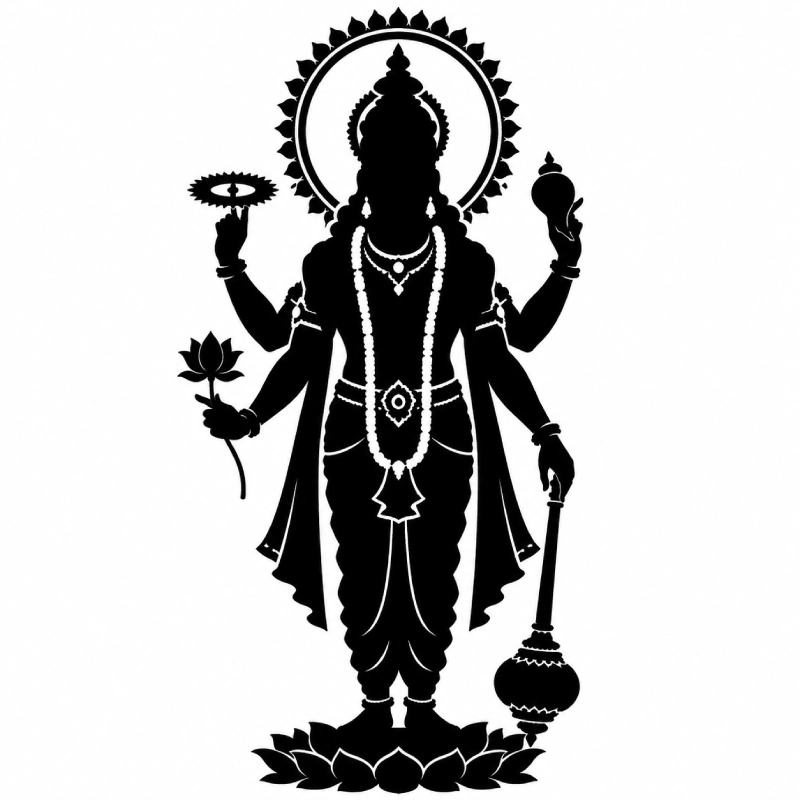
Para Vāsudeva / Nārāyaṇa
The Supreme Lord in His highest form
Para Vāsudeva is the highest and original form of Bhagavān. This means He is the full, supreme reality from whom all other divine forms expand. He possesses all six perfect qualities: jñāna, bala, aiśvarya, vīrya, śakti, and tejas—perfect knowledge, strength, lordship, power, energy, and splendor.
From this supreme form, Bhagavān reveals Himself in other ordered manifestations so that He can govern the universe, protect all beings, dwell within the heart, and accept worship in many approachable ways.
The first major expansion from Para Vāsudeva is the Caturvyūha—the fourfold arrangement of Vāsudeva, Saṅkarṣaṇa, Pradyumna, and Aniruddha. From this divine order, further forms appear. In particular, Aniruddha is closely linked with the appearance of the vibhava avatāras, the descents of the Lord into the world, through Viśākhayūpa.
The Caturvyūha are four primary manifestations of Bhagavān. They are not separate gods, but eternally present, ordered forms of the same Supreme Lord, each connected with a specific divine function (creation, maintenance, dissolution, and full revelation):
Para Vāsudeva → Caturvyūha
Vāsudeva
Fullness of all six divine qualities
Saṅkarṣaṇa
jñāna + bala
Pradyumna
aiśvarya + vīrya
Aniruddha
śakti + tejas
Viśākhayūpa
The luminous bridge through which vibhavas appear
In this chart, Viśākhayūpa marks the transition from the Lord's subtle vyūha manifestations to His vibhava or avatāra forms. A vibhava, or avatāra, is a special manifestation in which Bhagavān appears for the protection, guidance, and upliftment of the worlds. These appearances are especially connected with Aniruddha, the vyūha most directly related to the manifest universe.
Therefore, Viśākhayūpa should not be understood as a separate deity or as the physical “birthplace” of the avatāras. Rather, it is the luminous link by which the Pāñcarātra texts move from the inner vyūha order to the many divine forms known in the world.
From Vāsudeva
From Saṅkarṣaṇa
From Pradyumna
From Aniruddha
Padmanābha-ādi Manifestations
(Manifesting from Aniruddha)
The vibhavas are Bhagavān’s special manifestations for protecting devotees, restoring dharma, and blessing the worlds. In the Pāñcarātra order, they are connected with Aniruddha, the vyūha most directly involved with the manifest universe. Viśākhayūpa represents the luminous bridge through which this vibhava-stream is presented. These are not ordinary births; they are divine descents or manifestations assumed by the Lord for specific purposes.
Listed in Ahirbudhnya Saṃhitā 5.50–56; repeated in Lakṣmī Tantra 11.19–25.
PadmanābhaThe lotus-naveled Lord linked with the beginning of cosmic manifestation and the emergence of the worlds.
DhruvaThe steady form that symbolizes firmness, support, and cosmic stability.
AnantaThe endless supporting form associated with Śeṣa, the foundation beneath the worlds.
Śaktīśa / ŚaktyātmanThe Lord as master and embodiment of divine power, showing that śakti is never apart from Him.
MadhusūdanaThe destroyer of Madhu, representing removal of obstruction, evil, and inner darkness.
VidyādhīdevaThe presiding Lord of sacred knowledge, right understanding, and true insight.
KapilaThe teacher-form who grants discriminative knowledge and spiritual clarity.
ViśvarūpaThe cosmic form in which the universe is seen as resting within Bhagavān.
VihaṅgamaThe swift manifestation, suggesting quick protection and unhindered divine movement.
KroḍātmanA boar-related form pointing to Bhagavān’s raising and protecting power toward the earth.
VaḍavāvaktraThe cosmic fire-faced form, suggesting hidden universal power beneath the surface of creation.
DharmaBhagavān manifest as righteousness itself, upholding the moral order of the worlds.
VāgīśvaraThe Lord of speech, mantra, sacred utterance, and divine expression.
EkārṇavāntaḥśāyinThe Lord reclining in the single cosmic ocean before creation unfolds.
KamaṭhākṛtiThe tortoise-shaped support-form beneath cosmic activity and divine action.
VarāhaThe boar avatāra who raises and protects the earth when it is submerged or endangered.
NarasiṃhaThe man-lion avatāra who protects the devotee and destroys oppressive evil with immediacy.
AmṛtaharaṇaThe form associated with recovering or securing nectar for the devas.
ŚrīpatiThe Lord of Śrī, showing that divine grace and compassion remain inseparable from Him.
Kāntātman AmṛtadhārakaThe beautiful nectar-bearing form associated with nourishment, beauty, and immortality.
RāhujitThe conqueror of Rāhu, showing divine mastery over cosmic obstruction and disturbance.
KālanemighnaThe destroyer of Kālanemi, representing victory over demonic opposition.
PārijātaharaThe bringer or bearer of the pārijāta, expressing divine victory and fulfillment.
LokanāthaThe Lord and protector of all worlds, emphasizing universal guardianship.
ŚāntātmanThe peaceful, calm, and auspicious form of Bhagavān.
DattātreyaThe sage-teacher manifestation associated with spiritual instruction and contemplative wisdom.
NyagrodhaśāyinThe form reclining upon the banyan, connected with preservation during dissolution.
EkaśṛṅgatanuThe one-horned fish manifestation preserving life through the waters of dissolution.
VāmanadehaThe dwarf form that reveals humility, wisdom, and hidden sovereignty.
TrivikramaThe three-striding Lord whose cosmic steps encompass the worlds.
NaraThe ascetic sage manifestation paired with Nārāyaṇa in divine tapas.
Nārāyaṇa ṚṣiThe supreme ascetic Lord performing tapas for the welfare of the worlds.
HariThe remover of bondage, sorrow, distress, and sin.
KṛṣṇaThe divine descent who protects devotees, restores dharma, and reveals bhakti in an intimate way.
ParaśurāmaRāma with the axe, who removes oppressive and adharmic rulers.
Rāma DhanurdharaRāma bearing the bow, the ideal king and steadfast protector of dharma.
VedavidThe knower and restorer of the Veda, preserving sacred knowledge in the world.
KalkinThe future manifestation who restores order and purifies the world at the end of Kali.
PātālaśayanaThe reclining form associated with the lower cosmic region.
These are not separate deities or disconnected categories. They are additional forms in which the same Supreme Lord becomes present for guidance, sustenance, and worship.
Antaryāmin
The Lord present within all beings
Arcā
The Lord in a deity form in temples and homes
Scriptural References
- Ahirbudhnya Saṃhitā 5.17–18, 5.21–25, 5.46–49, 5.50–56, 5.57–59
- Lakṣmī Tantra 4.11–19, 11.12–18, 11.19–30, 11.40–51
- Sātvata Saṃhitā is cited for fuller details on forms, weapons, śaktis, and worship.
Note
This chart gives a simple introduction to these divine forms, their names, and how they appear in the Pāñcarātra tradition. It is meant to help you see the basic flow of manifestation clearly, without trying to include every detail from scripture in one place.
If you want to go deeper, the Pāñcarātra texts explain much more about each form, including their appearance, symbols, energies, and worship. Some important sources are the Ahirbudhnya Saṃhitā and the Lakṣmī Tantra.
If you remember only one thing, remember this: all of these forms remain the same Bhagavān, unfolding in distinct but connected ways for cosmic order, protection, guidance, and worship.